
Diastasis recti is often associated with pregnancy, but it can affect men too. The condition occurs when the connective tissue between the two sides of the abdominal muscles stretches and widens, leaving a larger-than-usual gap. Some men first notice something unusual when they’re exercising, lifting weights or getting out of bed. You might notice a ridge running down the middle of your stomach, or a bulge that becomes more obvious when your abdominal muscles tighten.
But does this mean you have diastasis recti? And if you do, what can you do about it?
Here, we explain what causes abdominal muscle separation in men, the signs to watch for, and the options available if it’s affecting your everyday life.
What Is Diastasis Recti in Men?

Your rectus abdominis muscles are the two long muscles running vertically down the front of your stomach. They’re commonly known as the six-pack muscles.
Between them sits a band of connective tissue called the linea alba.
Diastasis recti develops when this tissue widens and thins, increasing the distance between the two sides of the abdominal muscles.
It’s not necessarily a sign that the muscles have torn, and it doesn’t automatically mean something serious is wrong.
Some people have a noticeable gap without experiencing any discomfort. Others find that their abdominal wall feels less supportive during certain movements.
What Causes Diastasis Recti in Men?
There isn’t always one obvious explanation for abdominal muscle separation.
Several factors may contribute.
Changes in abdominal pressure
Activities that repeatedly put considerable pressure on the abdominal wall may contribute to diastasis recti in susceptible individuals.
This can include strenuous lifting, particularly when the abdominal muscles are repeatedly loaded without adequate control.
However, lifting weights doesn’t automatically cause the condition.
Body weight and abdominal changes
Changes in body composition and abdominal size can affect the way the stomach looks and how pressure is distributed across the abdominal wall.
Excess abdominal weight may contribute in some men, although it shouldn’t be assumed to be the cause in every case.
Ageing and connective tissue
The tissues supporting the abdominal wall can change as we get older.
Genetics and individual differences in connective tissue may also influence susceptibility to muscle separation.
Previous abdominal surgery
Some men develop changes in their abdominal wall following surgery or injury.
If you notice a new bulge after an operation, it’s important to have it examined rather than assuming it’s diastasis recti.
What Are the Symptoms of Diastasis Recti in Men?
Not everyone experiences symptoms.
In fact, some men only notice the separation when they see a change in their stomach’s appearance.
Possible signs include:
- A visible ridge or dome along the centre of the abdomen when sitting up or straining.
- A noticeable gap between the abdominal muscles.
- A feeling of reduced abdominal support during certain movements.
- Difficulty controlling the abdominal wall during exercise.
- Changes in the shape of the stomach when the muscles contract.
Back discomfort can occur alongside diastasis recti, but it doesn’t necessarily mean the separation is causing the pain.
These signs aren’t enough to confirm a diagnosis. Other abdominal conditions can look similar, so a proper assessment matters.
Is Diastasis Recti the Same as a Hernia?
No. Although the two conditions can sometimes look alike, they aren’t the same.
With diastasis recti, the connective tissue between the abdominal muscles becomes wider, but there isn’t necessarily a hole or defect in the abdominal wall.
A hernia involves tissue pushing through a weakness or opening in the surrounding muscle or connective tissue.
You can have both conditions at the same time.
If you’ve noticed a new lump, particularly around your belly button, arrange an assessment with your GP.
A painful, hard or suddenly worsening bulge, especially with vomiting or other acute symptoms, needs urgent medical attention.
How Is Diastasis Recti Diagnosed in Men?
A healthcare professional will usually begin by asking about your symptoms, medical history and any changes you’ve noticed.
They may examine your abdomen while you’re resting and during gentle movements that engage your stomach muscles.
The assessment isn’t simply about measuring the width of the gap; how your abdominal wall functions matters too.
Occasionally, imaging may be recommended if the diagnosis is uncertain or a hernia is suspected.
Can Diastasis Recti in Men Be Improved?
There are ways to manage abdominal muscle separation, but the best approach depends on your circumstances.
Physiotherapy and core rehabilitation
Physiotherapy is generally the first approach considered when diastasis recti needs treatment.
A physiotherapist can assess your abdominal muscles and develop an exercise programme suited to your current strength, movement and symptoms.
The focus may include improving abdominal control, coordination and your ability to manage pressure during everyday activities.
Some people see a smaller gap, but complete closure isn’t guaranteed.
Exercise and Strength Training
If you’ve been diagnosed with diastasis recti, you may still be able to enjoy your usual exercise routine, though some adjustments could help.
Rather than avoiding exercise completely, focus on finding movements that feel comfortable and building abdominal strength at a manageable pace.
You might notice your stomach bulging in the middle during certain exercises, particularly when lifting weights or performing sit-ups. If this happens, or a movement causes discomfort, it may be worth changing how you perform it.
A physiotherapist with experience in abdominal rehabilitation can assess how your muscles are working and help you develop a suitable exercise routine.
Surgery
Most men with diastasis recti won’t need an operation, especially if the separation isn’t causing significant problems.
However, surgery may be discussed when abdominal wall weakness is affecting everyday activities, symptoms continue despite appropriate rehabilitation, or a hernia is also present.
Whether an operation is appropriate depends on several factors, including your symptoms, medical history and the findings of a specialist assessment.
If you’re considering surgery, a suitably qualified medical specialist can talk you through the available options, possible complications, and what recovery might involve.
Can LA-EMS Body Sculpting Treat Diastasis Recti in Men?
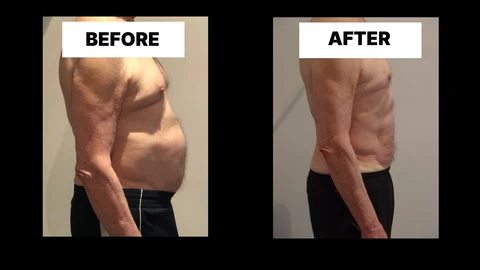
LA-EMS is an electromagnetic body-sculpting technology designed to stimulate muscle contractions.
At LA LIPO, our LA-EMS body-sculpting service is available through home-based appointments in selected UK locations.
However, there’s an important distinction between stimulating muscle contractions and treating diastasis recti.
LA-EMS has not been established as a replacement for physiotherapy or medical treatment for abdominal muscle separation.
Claims that a particular device can close the abdominal gap, repair connective tissue or correct diastasis recti require reliable clinical evidence specific to that equipment and treatment protocol.
If you’re concerned about abdominal separation, we recommend seeking an assessment from your GP or an appropriately qualified physiotherapist before considering cosmetic body-sculpting treatments.
When Should Men Seek Medical Advice?
If you’ve noticed a persistent bulge, a change in your abdomen’s shape, or difficulty with everyday movements, it’s worth discussing this with your GP.
An assessment is particularly important if:
- The bulge has appeared suddenly or is becoming more noticeable.
- You’re experiencing ongoing pain or discomfort.
- You’ve previously had abdominal surgery.
- You suspect you might have a hernia.
- Your symptoms are interfering with exercise or normal activities.
Getting the right diagnosis will help you understand what you’re dealing with and which options are appropriate.
Diastasis Recti in Men – Frequently Asked Questions
1. Can men get diastasis recti without being overweight?
Yes. Men of different body shapes and sizes can develop abdominal muscle separation.
Weight is only one possible contributing factor. Connective tissue characteristics, abdominal loading and other individual factors may also play a role.
2. Is diastasis recti common in men?
It does occur in men, although much of the published research focuses on women following pregnancy.
The exact prevalence in men is less clearly established, so it would be misleading to suggest a specific percentage without reliable evidence.
3. Can weightlifting cause diastasis recti?
Repeated heavy loading may contribute to abdominal wall strain in some people, but weightlifting alone doesn’t mean someone will develop diastasis recti.
If you already have abdominal separation, a physiotherapist can help you adapt your training without unnecessarily avoiding exercise.
4. Can men develop diastasis recti as they get older?
Yes. Diastasis recti can occur in older men.
Changes in connective tissue, abdominal wall function and other individual factors may contribute, although ageing itself doesn’t guarantee that separation will develop.
5. Can diastasis recti make a man’s stomach stick out?
Yes, some men with diastasis recti notice that their stomach sticks out more than it used to. You might also see a raised line down the centre of your abdomen when sitting up, lifting something or tightening your stomach muscles.
However, not every protruding stomach is caused by diastasis recti. Weight changes, bloating and other abdominal conditions can create a similar appearance.
If you’ve noticed an unusual bulge or a change in your stomach’s shape, it’s worth speaking to your GP to find out what’s causing it.
6. Can diastasis recti cause back pain in men?
Some people with diastasis recti also experience back discomfort or difficulties with abdominal control.
However, back pain has many possible causes, and muscle separation doesn’t mean it’s responsible.
Persistent back pain should be assessed appropriately.
7. Can diastasis recti heal on its own in men?
The appearance and function of the abdominal wall may change over time, but spontaneous improvement isn’t guaranteed.
Some men may benefit from targeted rehabilitation, while others have a separation that doesn’t cause symptoms or require treatment.
8. What exercises are best for diastasis recti in men?
No single exercise programme suits everyone.
A physiotherapist may recommend progressive abdominal strengthening, breathing exercises and movements that help improve control of the abdominal wall.
The exercises chosen will depend on your symptoms, existing strength and ability to manage abdominal pressure.
9. Should men avoid sit-ups and crunches with diastasis recti?
Not necessarily forever.
Some exercises may need adapting if they cause excessive doming, discomfort or difficulty controlling the abdominal wall.
As strength and control improve, a physiotherapist may help you reintroduce more challenging movements.
10. Can losing weight fix diastasis recti?
Weight loss may change the appearance of the abdomen in some people, but it doesn’t necessarily reverse widening of the linea alba.
A flatter-looking stomach isn’t proof that the abdominal separation has closed.
11. Is diastasis recti dangerous?
Diastasis recti itself is generally not considered dangerous and doesn’t carry the same risks as an abdominal hernia.
However, a new or unexplained abdominal bulge should be assessed to rule out other conditions.
12. Can diastasis recti affect men who have never exercised?
Yes. You don’t have to be a weightlifter or regular gym user to develop abdominal separation.
The condition can occur in people with different activity levels and medical histories.
13. Can LA-EMS close abdominal muscle separation?
There isn’t sufficient established evidence to promise that LA-EMS equipment will close the abdominal gap or repair the connective tissue involved in diastasis recti.
LA-EMS body sculpting should not be presented as a proven treatment for the condition.
14. Is surgery necessary for diastasis recti in men?
Most people won’t automatically need surgery.
Physiotherapy is generally the first-line treatment when needed. Surgery may be discussed in selected circumstances, particularly where symptoms significantly affect everyday function or an associated hernia is present.
15. How do I know whether I have diastasis recti or a hernia?
Both conditions can produce a visible abdominal bulge, so it’s difficult to tell them apart by appearance alone.
A healthcare professional can examine your abdomen and arrange further investigations if necessary.
16. Can I book an LA LIPO consultation if I have diastasis recti?
You can contact LA LIPO to enquire about our available body-sculpting services.
Please tell us about any diagnosed abdominal conditions or concerns before arranging an appointment.
If you suspect you have diastasis recti, seek medical or physiotherapy assessment first. Our cosmetic services should not be used in place of appropriate medical care.
Looking for Information About LA LIPO Body Sculpting?
At LA LIPO, we offer home-based LA-EMS body-sculpting services in selected areas of the UK.
If you’d like to understand how our equipment works, what an appointment involves, or whether the service may be suitable for you, our team can provide more information.
We won’t suggest that cosmetic body sculpting is a proven way to repair diastasis recti. Anyone concerned about abdominal muscle separation should seek an appropriate clinical assessment.
Contact LA LIPO to Enquire About Body Sculpting
Important: This article provides general information and is not intended to diagnose diastasis recti or recommend treatment for an individual medical condition. Abdominal bulges and related symptoms can have different causes. Speak to a suitable healthcare professional for assessment and advice. LA-EMS body sculpting is not an established substitute for physiotherapy, medical investigation, or surgery where clinically indicated.
For Further Information, Please Call Us ON 03300 100 238